
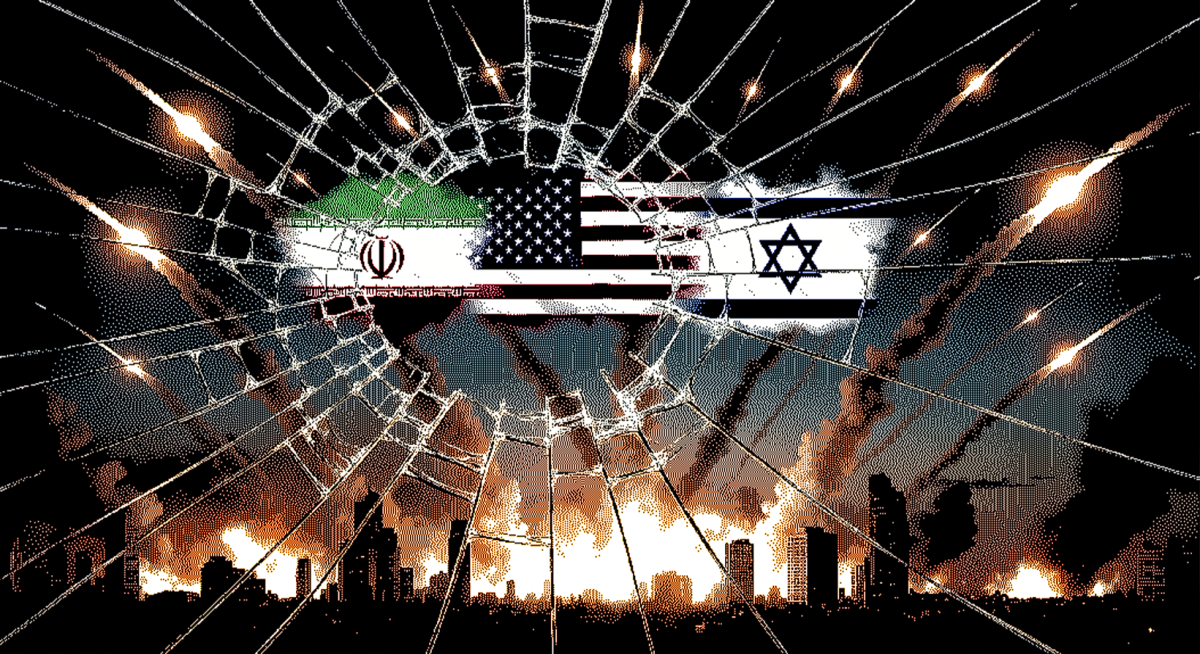
Boots on the Ground
Potential Scenarios for What Happens If America Invades Iran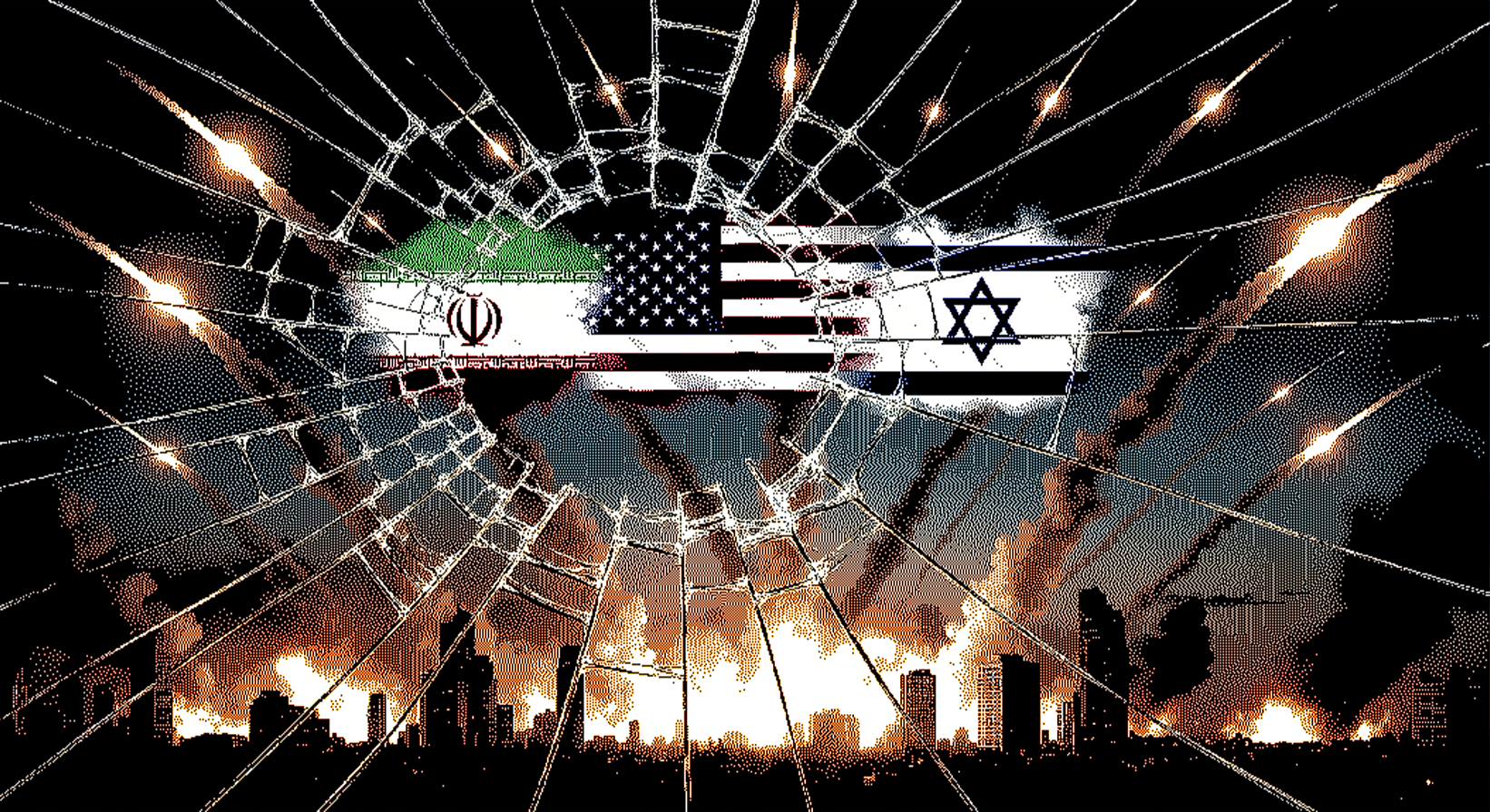
It had happened before. Missile strikes, targeted assassinations, brief escalations that flared and cooled within days. Each time, the conflict found its ceiling. Each time, the region exhaled. When Donald Trump ordered the strike that killed Supreme Leader Ali Khamenei on Feb. 28, he had every reason to believe this time would be no different.
The war that was supposed to last two or three days is entering its fifth week. The war that was going to produce regime change from the air alone has produced no regime change. The war that was going to open the Strait of Hormuz has left the strait closed, and the global economy is beginning to feel the weight of that closure in ways that extend far beyond the price of a tank of gas.
What the air campaign has produced is something genuinely significant: the most intensive opening air campaign in modern history, eclipsing the first three days of NATO’s bombing of Libya in 2011. Iran’s conventional military has been devastated. Its navy is functionally destroyed. More than 100 ships have been sunk. Scores of senior commanders are dead. The supreme leader himself was killed in the opening strikes.
And none of it has been enough. Because the war Iran is actually fighting is not the war America is winning.
"The conflict may best be understood as two parallel wars. One is the campaign of American and Israeli air strikes against the Iranian regime; the other is Iran’s war on the global economy. Both are largely one-sided.”
Iran has executed a strategy of asymmetric economic warfare with a precision that has eluded its conventional forces entirely. By imposing a de facto blockade on the Strait of Hormuz — not by closing it with force, but by making commercial shipping insurance unwritable and tanker captains unwilling to transit — Tehran has seized the one lever that a U.S. president facing midterm elections cannot afford to ignore. Every day Brent crude stays above $100 is a day the political cost of this war compounds.
The decision point for ground operations has arrived. The Pentagon has drawn operational plans detailed enough to include protocols for detaining Iranian soldiers. The 82nd Airborne’s training has been canceled. The Marines are moving. Polymarket has priced it at 72 percent probability before year’s end. And Iran’s foreign minister has responded with four words that should give every planner pause: “We are waiting for them.”
What follows are five scenarios for the geopolitical, military, and political consequences of a U.S. ground operation in Iran, built from the specific conditions of spring 2026: a war already consuming munitions at the most intensive rate in modern history, a global energy shock spreading from helium prices to LNG contracts, a fracturing NATO alliance, a Chinese adversary conducting intensive operational study, and a president whose three political superpowers — his ability to impose his own reality, his mastery of leverage, and his dominion over his party — are all being tested simultaneously by a conflict that is not cooperating with his narrative.
Potential Futures
SCENARIO 1:
The Kharg Gambit: Seizure, Leverage, Exit (33% Likelihood)
SCENARIO 2:
The Uranium Hunt: Special Forces, Isfahan, and the Nuclear Question (25% Likelihood)
SCENARIO 3:
The Escalation Trap: In Easy, Out Impossible (66% Likelihood)
SCENARIO 4:
The Boer War: America Wins, and Loses Anyway (47% Likelihood)
SCENARIO 5:
The Quagmire: History’s Default Outcome (30% Likelihood)
SCENARIO 1: The Kharg Gambit: Seizure, Leverage, Exit
[33% likelihood]The most operationally compact scenario begins with a clear, limited objective and depends on a chain of assumptions, each individually plausible, that must all hold simultaneously.
Marines from the converging expeditionary force execute an amphibious assault on Kharg Island — the rocky terminal through which 90 percent of Iran’s crude oil exports flow — following a sustained air preparation campaign that has already struck more than 90 military targets on the island. The oil infrastructure itself is left intact. That is the leverage. The message, delivered through Qatari intermediaries (Oman having damaged its credibility with Gulf neighbors through its sympathetic stance toward Tehran): reopen the strait, or the island’s export capacity goes dark indefinitely.
“He who controls Kharg Island controls the destiny of this war.”
The scenario’s architecture is seductive. It is the option with the clearest off-ramp: hold a defined piece of territory, extract a defined concession, and leave. Former NATO Supreme Allied Commander Adm. James Stavridis has publicly endorsed the logic: “Go in there, take it. You don’t have to destroy the infrastructure. In fact, you hold it hostage.”
But the scenario’s plausibility rests on three assumptions that the past four weeks of war have each separately put under stress. First, that Iran’s severely degraded conventional forces cannot mount effective resistance. Second, that Marines holding an island 20 miles off the Iranian coast can withstand sustained missile and drone attacks — from a country that, even after 7,000 airstrikes, is still averaging near 100 drone and missile launches per day. Third, and most critically, that the economic pressure of losing export capacity will compel a regime that has already lost its supreme leader and most of its senior cabinet to negotiate rather than escalate.
That third assumption deserves particular scrutiny. The regime that survives this war, according to Wall Street Journal analysis citing Israeli intelligence sources, will be dominated by a second generation of IRGC officers whose formative experience was the Syrian civil war — men who watched decades of institutional investment collapse overnight and resolved never to allow it again. They will be, in the assessment of Foundation for Defense of Democracies senior fellow Reuel Marc Gerecht, “more ideologically strident” and “even less skilled at governing.” That is not a profile that responds to economic leverage.
Military trajectory: Amphibious seizure of Kharg Island within 30 days; Marines hold under sustained drone and missile barrage; negotiation channel opens through Qatar.
Geopolitical response: China pressured directly — it stands to lose roughly 1 million barrels per day of Iranian supply; Gulf Arab states forced off fence; Europe furious but incentivized to broker resolution.
Domestic politics: The highest-reward scenario for Trump politically. Success vindicates the gamble; failure or prolonged holding operation collapses approval rating toward Nixon territory.
Wildcard: Iran retaliates by activating the Houthis against Red Sea shipping simultaneously, compounding the energy shock and foreclosing the bypass pipelines that have been Saudi Arabia’s and the UAE’s only relief valve.
Iran has launched 3,606 missiles and drones at U.S. Gulf-state allies in the 23 days between Feb. 28 and March 22 alone — an average of 157 projectiles per day, 72 percent of them drones. The opening salvo on March 1 sent 960 projectiles into the region in a single day. The UAE has absorbed the heaviest volume: 539 ballistic missiles and 1,479 drones. Kuwait has taken 316 ballistic missiles. Saudi Arabia and Bahrain have each sustained hundreds of additional strikes. That barrage is what American and allied interceptors have been consuming to answer.
The math is punishing. More than 300 Tomahawk cruise missiles were fired in the opening days of Operation Epic Fury; the Pentagon had planned to purchase just 57 new ones in the current fiscal year. America is estimated to have fired roughly 140 Patriot PAC-3 MSE interceptors and more than 150 THAAD interceptors in the first week alone; drawing down stocks already depleted by last year's 12-day war. Iran's daily launch rate has declined roughly 91 percent from its March 1 peak, a figure the White House has cited as evidence of success. What it also represents is 23 consecutive days of American interceptors leaving their tubes at $4 million apiece to answer drones that cost $35,000 each. Marines seizing and holding Kharg Island — within easy range of those same launchers — would extend that arithmetic indefinitely, with no ceiling in sight. "There is no sugar-coating this situation," CSIS analyst Tom Karako has written. "The scale of recent munition expenditures and the degradation of U.S. missile-defense capability may well undercut deterrence in the Pacific for the remainder of this decade."
SCENARIO 2: The Uranium Hunt: Special Forces, Isfahan, and the Nuclear Question
[25% likelihood]The scenario that Secretary of State Marco Rubio has made explicit — “People are going to have to go and get it” — is also the scenario that military planners describe as one of the most complex operations in U.S. military history.
Iran’s approximately 400kg of highly enriched uranium, enough for roughly ten nuclear devices if enriched slightly further, remains the unresolved problem at the center of the war’s justification. Trump claimed to have “obliterated” the nuclear program last June. Eight months later, he described the same program as an active threat. The uranium is still there. The IAEA’s Rafael Grossi has placed it “mainly” at Isfahan, in central Iran, in tunnels whose entrances were sealed with earth in February. Some remains at Natanz and Fordow.
“There’s no doubt that the U.S. can do it. They’re probably the only military in the world that could. But you either do it incredibly small and insert in a very covert way, or you go in at scale — you essentially turn that part of Iran into the United States of America for a while.”
The operational architecture of a successful uranium seizure, as mapped by The Economist’s analysis, is staggering in its complexity. MH-47G Chinook helicopters from the 160th Special Operations Aviation Regiment — the unit that captured Venezuela’s Nicolás Maduro — could potentially reach Isfahan, roughly 500 kilometers inland, but would require refueling infrastructure to return. A battalion-plus battlegroup of 1,000 or more troops would be needed to hold a perimeter. A nearby airfield — Badr airbase sits 10 kilometers from Isfahan’s nuclear sites — would need to be seized or a makeshift strip created. Nuclear-handling equipment, earth-moving machinery, and specialist containment teams would need to be parachuted in on pallets. The material itself, stored as uranium hexafluoride in cylinders that must be kept separated to prevent chain reaction, presents handling challenges that could turn a Hollywood-style operation into a chemical disaster.
The scenario’s political logic is straightforward. Trump, who has spoken of the humiliation Americans of his generation still feel from the 1979 hostage crisis, wants a set-piece denouement: a tangible, visual, undeniable victory that he can hold up as proof that the war achieved its stated purpose. Seizing the uranium is that denouement. It lets him claim the nuclear program is genuinely dismantled, not just temporarily degraded.
The scenario’s military logic is considerably more complicated. Delta Force and SEAL Team Six have spent years preparing for analogous operations to secure Pakistani nuclear weapons in a crisis scenario. But those plans were built around a cooperative government and a known infrastructure. Isfahan is hostile territory under active aerial bombardment, with IRGC special cells — as many as 30,000 independent units, according to IRGC co-founder Mohsen Sazegara — distributed throughout the country specifically to operate without central command.
Military trajectory: Joint Special Operations Command insertion toward Isfahan; simultaneous air suppression of IRGC bases within 200km; multi-day ground hold of nuclear sites.
Geopolitical response: IAEA involvement requested immediately to validate seizure; Israel celebrates most significant strategic outcome of the war; China recalculates Taiwan timeline.
Domestic politics: The most durable political victory available if successful. Trump can credibly claim to have done what no previous president accomplished: physically removed Iran’s nuclear material.
Wildcard: A handling accident during extraction — moisture entering uranium hexafluoride cylinders, triggering toxic fluoride gas release in a populated area — turns the mission’s most dramatic moment into its most catastrophic.
SCENARIO 3: The Escalation Trap: In Easy, Out Impossible
[66% likelihood]The most historically probable scenario is the one that begins with the most reasonable-sounding premises. A limited operation. Achievable objectives. A defined timeline. It is the scenario that the internal logic of every American ground war since Vietnam has produced, regardless of how the original planning described it.
The escalation trap, as University of Chicago political scientist Robert Pape has named it in his analysis of this specific conflict, has a structural character that is independent of intent. It is not produced by bad planning or cowardice or political miscalculation, though those things accelerate it. It is produced by the gap between what air power can achieve and what ground control of a hostile country actually requires.
Iran’s anti-ship missiles are truck-mounted, mobile, and distributed. Their range extends beyond 200 miles for many systems; Shahed drones can reach targets up to 1,500 miles from their launch point. This means that securing the Strait of Hormuz from a coastal foothold may not be sufficient. Suppressing the threat may require control of territory that extends well inland. Each extension of the operational perimeter requires more troops to hold it. More troops require more protection. More protection requires more air cover. More air cover requires more tankers. The tankers — five KC-135s have already been damaged or destroyed in the war — are among the most limited resources in the theater.
“If he goes deeper — if we actually cross the threshold to even limited ground operations — this will likely lead to a much longer set of consequences, and the political costs will go up rather dramatically. He may still decide in July or August to pull back, but that then may well be his presidency.”
The geopolitical dimensions of this scenario are severe and multidirectional. Russia, which has reportedly been sharing targeting intelligence with Iran on American troop positions, has already floated a quid pro quo: end intelligence sharing with Tehran in exchange for the U.S. ending assistance to Ukraine. That offer was reportedly rejected. In a prolonged ground operation, with American forces taking casualties on Iranian soil and domestic political pressure building, that offer — or a version of it — comes back to the table in a much weaker American negotiating position.
China’s response is subtler and ultimately more consequential. The Foundation for Defense of Democracies’ Craig Singleton has identified Beijing’s dual conclusion from watching this conflict: American military power is real and formidable; the United States is simultaneously volatile and strategically overextended. A prolonged Iran ground war doesn’t give China the green light for Taiwan. It gives China time — the commodity it prizes most — to harden supply chains, build missile stockpiles, and let American munitions inventories drain further. The Economist has estimated that Republicans now face a roughly 50 percent chance of losing the Senate in November, up ten points from pre-war projections. A lamer duck presidency heading into 2027 with depleted military readiness and a fractured party is the strategic environment in which Beijing would choose to move.
The domestic political architecture of the trap has already begun to materialize. Tucker Carlson has spoken of betrayal on his platform, reaching the exact MAGA constituency whose support for the war is “strong, but softening.” Joe Kent, the Trump-appointed counterterrorism director and decorated Special Forces veteran, has resigned publicly, calling the war a product of Israeli pressure rather than genuine American national interest. In private, The Economist reports, elected Republicans are “seething.”
Military trajectory: Coastal insertion expands to inland operations within 60-90 days; force requirements grow from thousands to tens of thousands; exit conditions become undefined.
Geopolitical response: Russia deepens intelligence support for Iran; China accelerates Taiwan-contingency planning; NATO allies formally distance themselves; Gulf states quietly pursue separate accommodation with Tehran.
Domestic politics: Trump enters Lyndon Johnson territory. The war defines the second term. Whether it ends the presidency depends on whether Trump can manufacture a narrative of victory before the midterms consume the House.
Wildcard: Iran activates proxy networks in Iraq, opening a multi-front conflict that makes the ground war’s casualty rate unpredictable and turns the original Hormuz rationale into one front among several.
SCENARIO 4: The Boer War: America Wins, and Loses Anyway
[47% likelihood]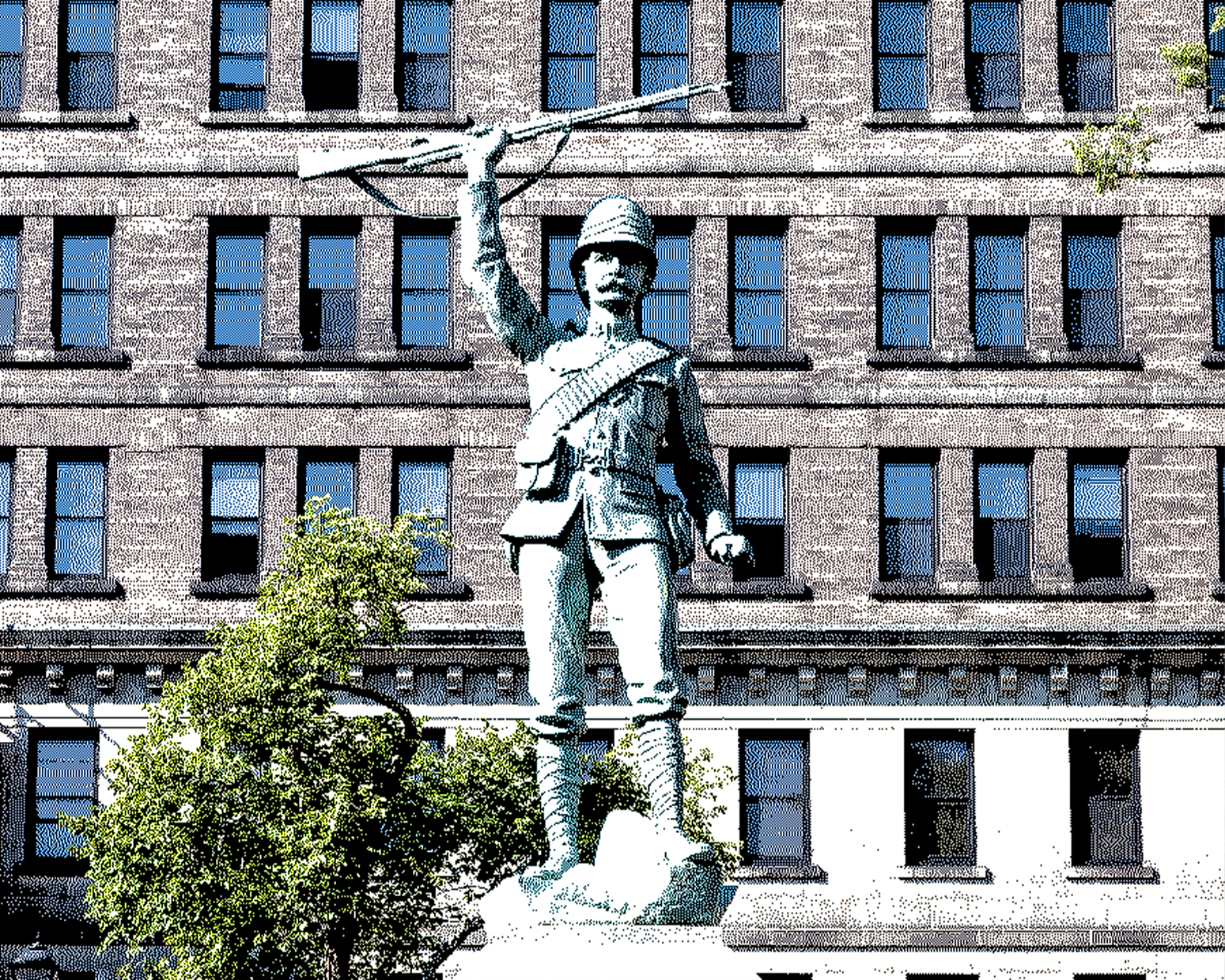
History’s most instructive parallel for this moment is not Vietnam, though the analogy is available and frequently deployed. It is the Boer War.
In 1899, Britain mobilized the full weight of its imperial military against a nation of farmers in southern Africa. Nobody gave the Boers a chance. Britain won — eventually, after three years that exposed the limits of imperial reach at the precise moment a rising United States was beginning to challenge British hegemony. The victory was real. The damage was irreversible. The Suez Crisis of 1956 — when the United States itself forced Britain and France to abandon a strategically sound Middle East campaign — completed the psychological transformation of two erstwhile great powers into medium powers with limited ability to shape the world around them.
“The war in Iran is not real. The architects of this war have made a virtue out of stupidity. The conflict waged by the U.S. feels like the first of its kind in the modern age: distinctly remote and profoundly ignorant.”
In this scenario, the United States achieves its tactical objectives. The Marines take Kharg Island or a portion of Iran’s southern coastline. The uranium is secured or destroyed. The Strait of Hormuz reopens, eventually, under American naval protection. The Islamic Republic survives in a weakened, more radical form, led by IRGC second-generation officers whose worldview was forged in Syria’s ruins and who have now personally experienced American military power on Iranian soil.
The cost of that victory is the subject of this scenario. And the costs are structural, not just financial. America has consumed, in the first 16 days of Epic Fury alone, an estimated 11,000 munitions — including more than 300 Tomahawk cruise missiles against a planned annual procurement of 57. THAAD interceptor stockpiles, already depleted by last year’s 12-day war, have been drawn down further. Marine expeditionary units have been diverted from Japan. Parts of a THAAD system have been pulled from South Korea. “The scale of recent munition expenditures and the degradation of U.S. missile-defense capability,” CSIS’s Tom Karako has written, “may well undercut deterrence in the Pacific for the remainder of this decade.”
China is watching this calculation with great precision. The People’s Liberation Army is conducting intensive operational study of the conflict — how American and allied forces neutralized Iranian air defenses, how the new arithmetic of cheap-attacker-versus-expensive-defender plays out at scale, how American munitions supply chains become stressed under sustained combat conditions. This is not academic. It feeds directly into Taiwan contingency planning. The signal Beijing is waiting for is not “America can’t fight.” It knows America can fight. The signal is “America has depleted its ready inventory fighting a lesser adversary and will require years to reconstitute.”
Meanwhile, at home, the information architecture surrounding this war has produced something politically novel and strategically dangerous. The White House has rendered Operation Epic Fury as a video game — literally, in a Nintendo Wii-themed social media post — with SpongeBob SquarePants asking “Wanna see me do it again?” over footage of strike explosions. “We’re over here just grinding away on banger memes, dude,” a senior White House official told Politico. The meme-ification of the war insulates it from serious domestic accountability — until the body bags arrive, at which point the entertainment framing collapses instantly and cannot be reconstructed.
Military trajectory: U.S. achieves tactical objectives over 3-6 months at resource costs that constrain Pacific readiness through at least 2029.
Geopolitical response: China accelerates its Taiwan timeline in the medium term; Russia uses the window to press in Ukraine; Gulf states revert to hedging posture toward whatever Iranian leadership survives.
Domestic politics: Trump declares victory. The political class accepts the framing short-term. Strategic damage is invisible to the electorate until the next crisis reveals the hollowed-out deterrence capacity.
Wildcard: A post-war Iran governed by Paydari Party hardliners, stripped of accountability and reconstituting its nuclear program within five years, produces a second confrontation from worse starting conditions — with a depleted American military and a China that has spent the intervening years closing the capability gap.
SCENARIO 5: The Quagmire: History’s Default Outcome
[30% likelihood]The scenario nobody in Washington wants to say out loud is the scenario history keeps producing. It is not primarily a military failure scenario. The United States military, as every analyst across the ideological spectrum has acknowledged, can execute a ground operation in Iran. The question is not whether it can go in. The question is what happens on day 31, and day 91, and day 365.
Iran is a country the size of Alaska, covering 636,000 square miles, much of it mountainous terrain specifically designed by geography to frustrate mechanized ground campaigns. The IRGC numbers between 125,000 and 200,000; the Basij paramilitary another 90,000 to 450,000. As IRGC co-founder Mohsen Sazegara has written, the organization has pre-positioned as many as 30,000 independent cells throughout the country to operate without central command, engaging in “fighting, sabotage and the creation of instability” indefinitely.
“95 percent of all suicide attacks around the world are in response to foreign ground presence. Iran is not losing. It is more powerful today than before the war.”
The political conditions for a generational quagmire are already developing independent of the military operation. The civilian casualty count, as documented by the Human Rights Activists News Agency, has passed 1,400 Iranians killed including more than 210 children. A missile strike on a girls’ school in Minab killed at least 165 people. The Economist’s correspondent in Iran reports a country whose mood has shifted sharply: before the war, anger at the regime was visceral; by week three, “fear of the attackers has eclipsed fear of the regime.” The narrative of liberation that the White House built its public case on has been replaced, inside Iran, by a nationalism that the bombing itself generated.
This is the phenomenon that Robert Pape’s decades of terrorism research has documented systematically: bombing triggers the politics of nationalism in the target country in ways that work against the bomber’s stated objectives. Before the bombing, there is a gap between the government and the society. Bombing closes that gap. It transforms an internal political contest into a foreign military intervention — and in a country with Iran’s specific history with American interference, going back to the CIA-engineered coup of 1953, the nationalist response is not a secondary effect. It is the primary one.
The war is also, separately, devouring the American military’s readiness for conflicts that may matter more in the long run. Two aircraft carriers — the USS Abraham Lincoln and USS Gerald R. Ford — are in the theater. The Ford has been at sea for nearly 270 days; it will soon break the record for the longest carrier deployment since Vietnam. A third carrier, the USS George H.W. Bush, is reportedly en route. This is, as a former Pentagon official now at the Atlantic Council has described it, “driving a car at 200 miles per hour for months, without an oil change.” The maintenance backlog will be felt for years after the war ends.
The congressional dimension is quietly approaching crisis. Trump launched Operation Epic Fury without congressional authorization, justified by operational surprise. That justification does not survive a ground campaign requiring the $200 billion supplemental appropriation the Pentagon has already signaled it will request. The War Powers Act’s 60-day clock is running. Democratic opposition, described by Trump ally John Fetterman as his party’s only organizing principle being “Trump Derangement Syndrome,” will not provide the 60 Senate votes needed for a supplemental spending bill. The funding architecture for a long war does not exist.
Military trajectory: Initial coastal operations expand to counterinsurgency within 90-180 days as IRGC cells activate; casualty rate becomes politically unsustainable by summer; exit conditions undefined.
Geopolitical response: Russia and China coordinate to maximize American attrition; Gulf Arab states pursue quiet separate accommodations with surviving Iranian leadership; European allies formally refuse involvement.
Domestic politics: The defining catastrophe of the second Trump term. The midterms produce a Democratic wave. The Iran war becomes the organizing narrative of the 2028 presidential race before Trump’s second term is half over.
Wildcard: A mass-casualty event on Iranian soil — a coordinated IRGC cell attack on a Marine position, an ambush of a special forces team — collapses domestic support overnight and creates pressure for immediate withdrawal that produces exactly the credibility collapse the intervention was designed to prevent.
Summary
The five scenarios above span a wide range of outcomes. What they share is a single structural observation that no amount of American airpower has yet resolved: Iran has found the one lever that overrides military supremacy in the spring of 2026. It is not nuclear capability. It is not ballistic missiles. It is a 54-kilometer strait and the willingness to make commercial insurance unwritable.
A ground operation changes that calculus. It also introduces risks — military, economic, strategic, domestic — that the Trump administration’s meme-and-dunking information strategy is specifically designed to prevent the American public from internalizing before the decision is made. The Economist has described this war as testing all three of Trump’s political superpowers simultaneously. The ground invasion question is the test of the fourth: whether this president, who ran on ending Middle East wars, can explain to the country why this one requires American boots on Iranian soil, and what victory looks like when they get there.
The Boer War analogy holds not because Britain lost, but because it won — and the winning cost more than the winning was worth. America is not Britain in 1902. But the logic of hollow victories and their long-run strategic costs is not bounded by time or flag.
History’s answer to the ‘what comes after’ question has been consistent. The problem was never getting in. The problem was always the morning after.
Likelihood estimates are independent scenario assessments, not cumulative probabilities, and do not sum to 100%. Each figure reflects the assessed plausibility of that scenario on its own terms. Scenarios are not mutually exclusive. These are analytical projections based on publicly available information as of summer 2026. They are not predictions.