
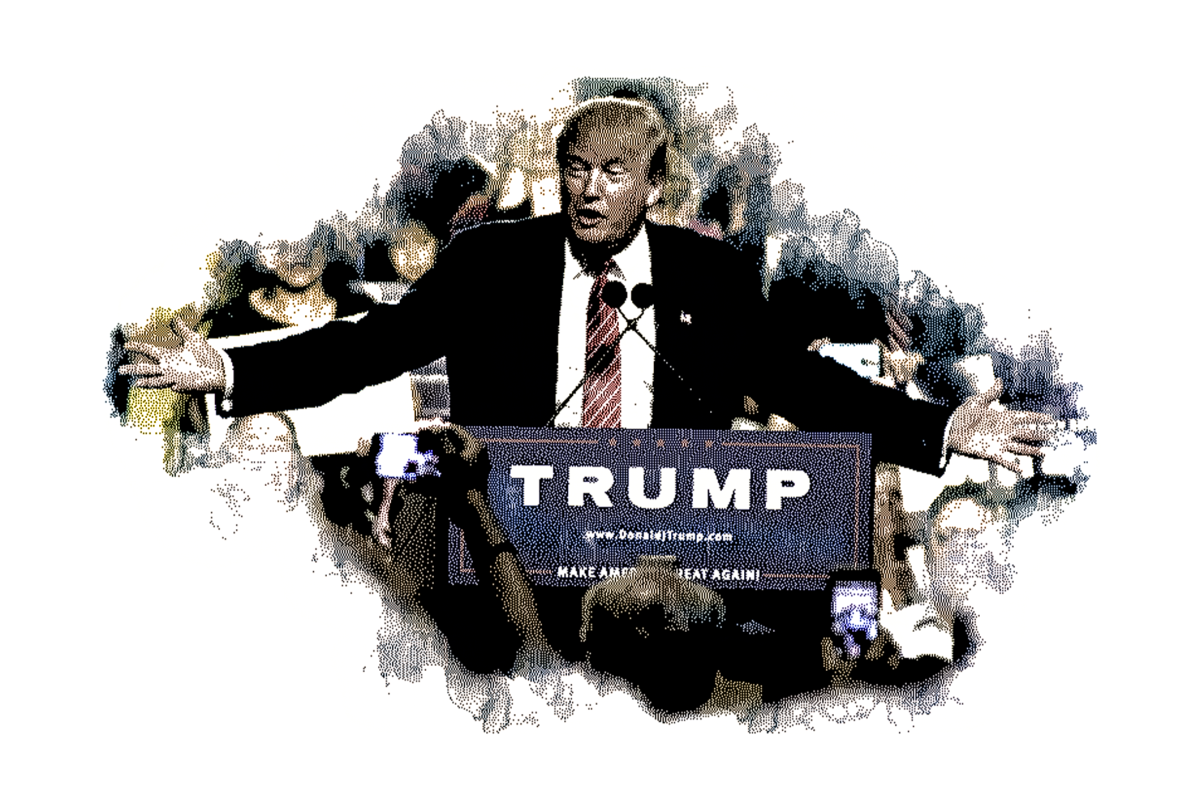
What happens after Trump dies?
After Trump: Five Futures for a Country Without Its Anchor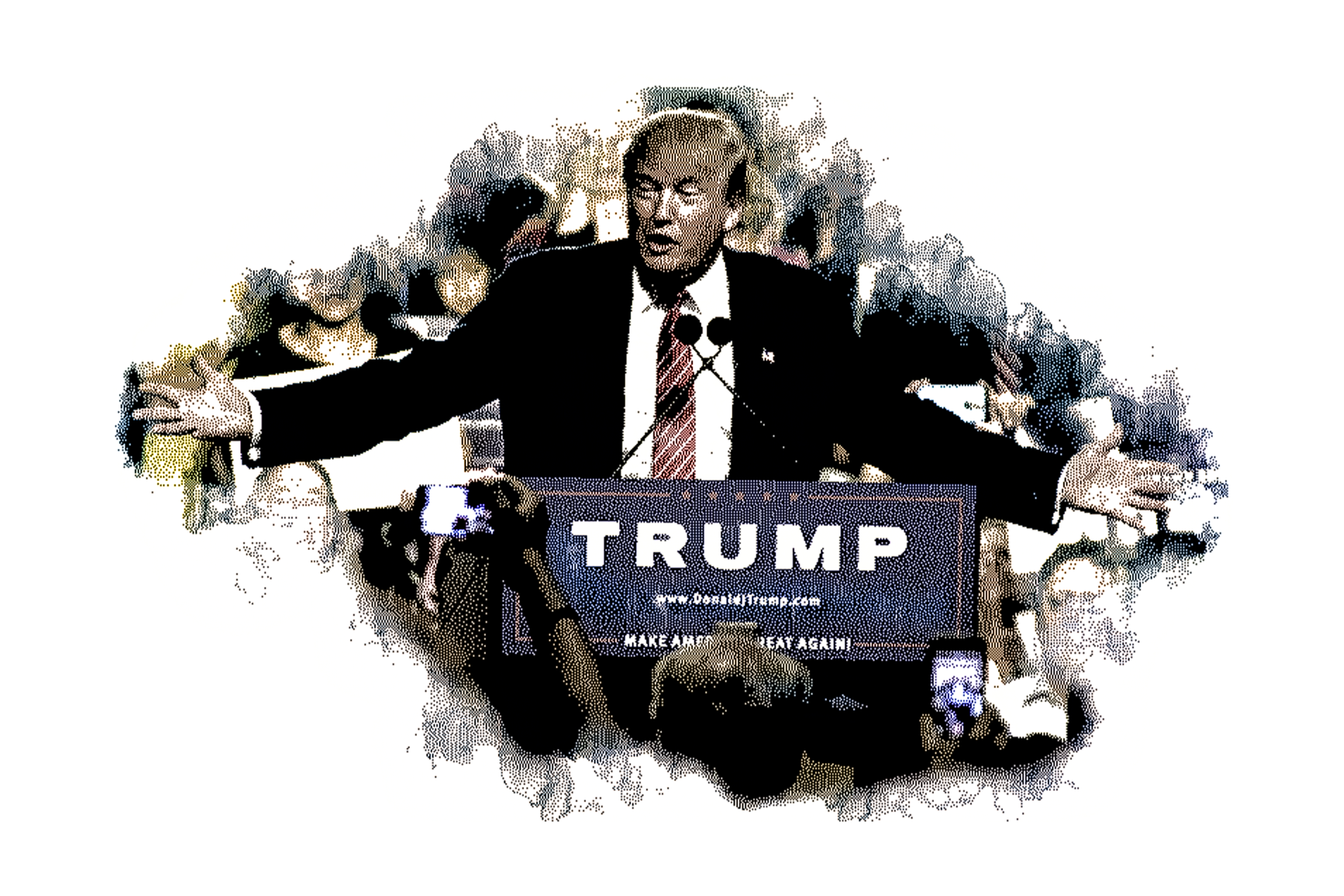
The question of what happens after Trump dies is one inseparable from timing. Had it occurred after his presidency, the story would be different — think a Ronald Reagan-style idolization, a movement that hardens into myth once its founder is safely in the past. The scenario modeled here unfolds in the summer of 2026, sometime in July, with the Iran conflict recently concluded. FTN forecasted five scenarios examining the shape of the American political landscape and how a Trump death in office would reorder it.
In a summer defined by the World Cup's spectacle, the political conventions of both parties, and the first full post-Iran-war polling cycle, the death of the 79-year-old president would not land on a country at war. It would land on a country at rest — and therefore a country with nowhere to hide from the reckoning that follows.
The Republican Party, no longer unified by an active military conflict that demanded rally-round-the-flag loyalty, would face the question it has deferred for a decade: Who are we without him? The Democratic Party, emboldened by midterm momentum and a deepening bench, would face its own: Who do we want to be?
What follows are five scenarios for a post-Trump political America, set against the specific conditions of a summer 2026 succession. The Iran ceasefire matters. The World Cup matters. The midterm calendar matters. The K-shaped economy matters. They all shape what the country's grief — and its hunger — looks like on the other side.
Potential Futures
SCENARIO 1:
THE OUT-MAGA-ING: VANCE AND THE LOYALTY HUNGER GAMES
SCENARIO 2:
THE OLD GUARD RETURNS: GOP TRIES TO UN-MAGA ITSELF
SCENARIO 3:
THE THREE-PARTY ELECTION: MAGA, GOP, AND DEMOCRAT
SCENARIO 4:
THE NEWSOM MOMENT: DEMOCRATS SEIZE THE CENTER
SCENARIO 5:
THE AOC ERA: A NEW AMERICAN POLITICS
SCENARIO 1: THE OUT-MAGA-ING: VANCE AND THE LOYALTY HUNGER GAMES
[75% likelihood]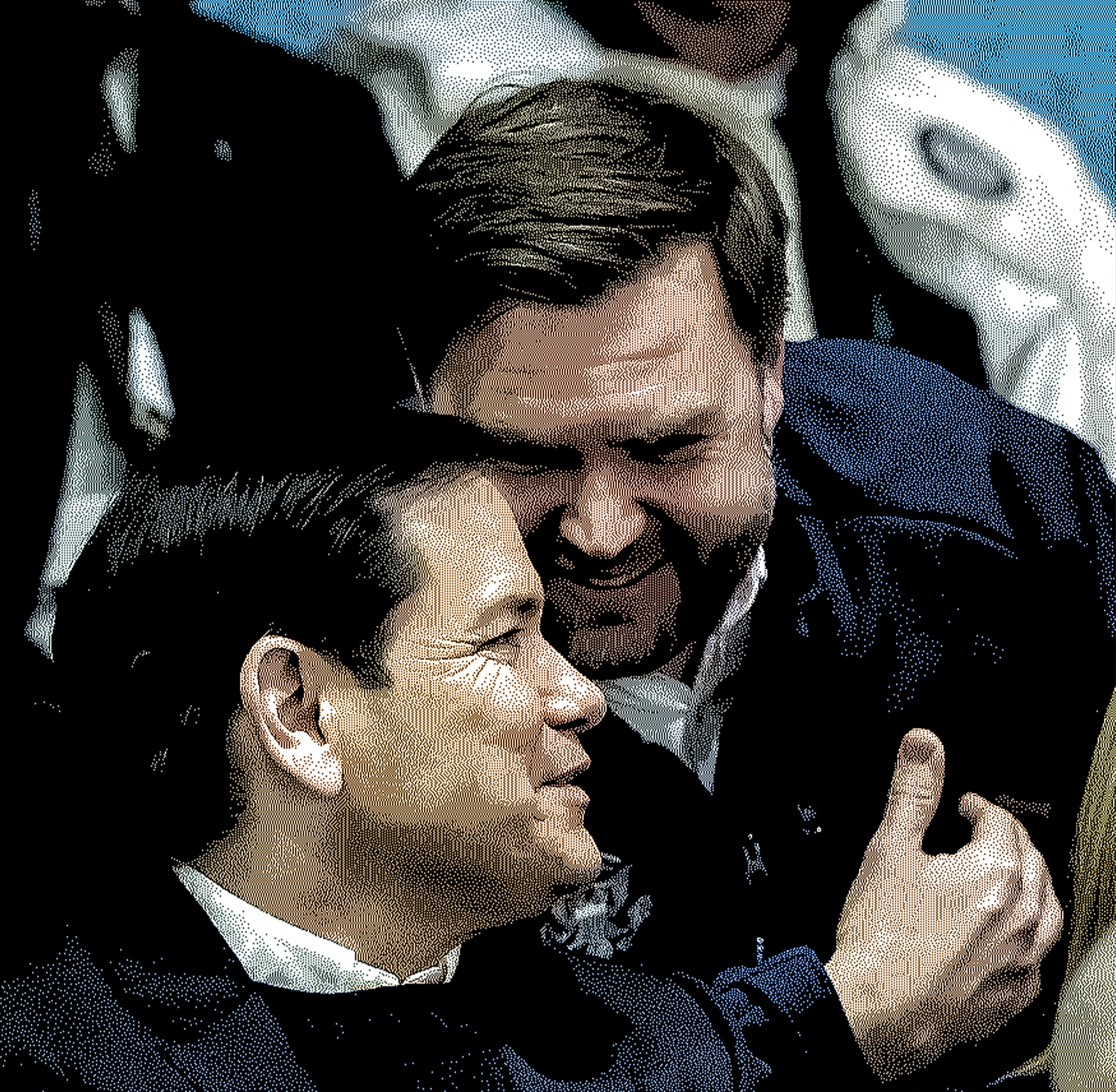
He is barely sworn in before the competition begins.
In this scenario, the most immediately plausible of the five, JD Vance assumes the presidency on a summer afternoon while the country is half-watching World Cup quarterfinal coverage. The constitutional machinery works. The transfer is orderly. But the MAGA base, a movement that has always been organized around a single personality rather than a set of durable principles, immediately begins auditing everyone around the new president for ideological purity.
Who was more MAGA? Who loved Trump more? Who was in the room when it mattered? These questions — which Trump himself stoked by endlessly pitting Vance against Rubio in donor rooms, asking crowds who they preferred over jumbo crab and rib-eye steaks — become the organizing logic of the post-Trump Republican Party almost immediately.
Vance, who spent two years carefully constructing his MAGA credentials while privately holding views the movement would find troubling — opposition to the Iran war, skepticism of Israel's influence over U.S. foreign policy, an economic populism that never materialized into policy — finds himself in a trap. The loyalty primary begins before the actual primary does.
"He is not Donald Trump. Vance appears as Trump's more sophisticated, more thoughtful, better-prepared heir, embracing his radicalism but lacking Trump's charisma and cultural presence."
Marco Rubio, who has publicly pledged not to challenge Vance, watches from State Department briefing rooms as his allies quietly begin positioning. Tucker Carlson, who called the Iran war 'absolutely disgusting and evil,' sees an opening to define what 'true MAGA' means now that Trump cannot define it himself. Donald Trump Jr., Vance's most vocal champion, launches what amounts to a shadow campaign to consolidate the base before anyone else can.
The competition has a specific and ugly shape. Conservative influencers who were already fracturing at AmericaFest — over the Nick Fuentes platforming, over Candace Owens's conspiracy theories about Charlie Kirk's murder, over the Epstein files — now compete for the mantle of 'most Trump.' It is not an ideological contest so much as a theatrical one: Who can perform grievance most convincingly? Who can signal that they would have done what Trump did, only harder?
The midterms, arriving in November, become a referendum not on policy but on authenticity. Republican candidates in competitive districts face a brutal choice: run as MAGA true-believers and risk the suburban voters who flipped over gas prices and the Iran war, or soften slightly and get primaried from the right by someone carrying a Trump endorsement that Vance issued grudgingly or not at all.
The result is a Republican Party simultaneously performing unity and consuming itself. Vance wins the show but cannot control the theater.
GOP trajectory: MAGA civil war conducted in public, with Vance as both referee and combatant. The party's ideological center of gravity drifts rightward on culture, incoherently on economics.
Democratic opportunity: Significant. The spectacle of Republicans auditioning for a dead man's approval is not a compelling midterm message.
2028 shape: Vance vs. a challenger from his right flank — likely a Groyper-aligned figure — in a primary that forces him to run away from his own record.
Wildcard: Trump Jr. enters the 2028 primary, transforming the loyalty contest into a literal dynastic competition and making Vance's position nearly untenable.
A four-way rift fractures the right wing of the United States in a post-Trump world. The smallest voices would belong to Libertarians and neoconservative Republicans — both largely displaced by the America First movement. Filling that vacuum is a white nationalist Groyper faction led by figures such as Nick Fuentes and Tucker Carlson. The largest remaining faction would be a memorialized MAGA movement, where the question of succession ignites fierce infighting: Who is the true heir? Will Trump anoint a successor before he dies — is it Rubio? Is it Vance? That fracture could produce a viable third-party run in 2028 (a true America First party) while MAGA consumes what remains of the Republican Party's traditional identity.
SCENARIO 2: THE OLD GUARD RETURNS: GOP TRIES TO UN-MAGA ITSELF
[45% likelihood]The dam breaks quietly. That is the thing nobody expects. There is no dramatic floor speech, no thunderous defection. It is a series of small retreats, each individually justifiable, that add up to something transformative.
In this scenario, Trump's death in the summer of 2026 — arriving in the lull after the Iran ceasefire, with the party's internal polling showing sustained damage from the war and elevated gas prices — gives the institutional Republican Party the permission it has been waiting eight years to act on. The adults, as they were once called, return to the room.
The catalyst is the midterms. With Kevin Kiley already gone independent in California, with Speaker Johnson's majority at 217 and functionally ungovernable, and with Republican candidates in suburban districts facing catastrophic internal polling on the economy, the party's professional class — the campaign operatives, the Senate moderates, the donor community that never fully loved MAGA but tolerated it — calculates that the MAGA brand is now a liability that can be quietly retired.
Vance, the constitutional successor, finds himself in an impossible position. He has spent two years suppressing his actual policy instincts — on antitrust, on worker protections, on the foreign policy restraint that defined his Senate career — to serve a president whose agenda bore little resemblance to Vance's own convictions. With Trump gone, those instincts reassert themselves. And the institutional GOP, hungry for a return to 'normalcy,' meets Vance halfway.
"His past antagonism toward corporations is not apparent in Trump's policies. On economic matters, the hillbilly elegist once seemed poised to remake Reaganite Republican dogma."
The result is not a dramatic repudiation of Trump but a slow dilution. Vance governs in a more conventionally conservative direction. Rubio, whose Munich Security Conference speech earned a standing ovation precisely because it delivered the same message as Vance's combative 2025 address but with a velvet glove, becomes the model for what a post-MAGA Republican looks like on the world stage: America First in substance, internationalist in tone.
The MAGA base, already fractured by the Epstein files, the Iran war, and the influencer civil war at AmericaFest, does not disappear. But without Trump to enforce loyalty, it cannot enforce accountability either. The influencers who built audiences on grievance — Carlson, Kelly, Walsh — find themselves hollering into a movement that is slowly being managed back toward respectability.
The GOP begins to look, in limited but meaningful ways, like the party of John McCain and Mitt Romney wearing a MAGA hat that it quietly takes off when the cameras aren't rolling.
GOP trajectory: Gradual de-MAGAfication dressed as continuity. The party retains populist economic rhetoric while quietly reversing course on the most volatile culture war positions.
Democratic opportunity: Moderate. A normalized GOP is a harder target than a chaotic one. Centrist Democrats benefit; the progressive wing does not.
2028 shape: Rubio vs. a MAGA purist challenger in the primary. Rubio wins. The general election is genuinely competitive.
Wildcard: A prominent Republican senator — Josh Hawley or Ted Cruz — refuses to accept the de-MAGAfication and launches a scorched-earth campaign to stop it, splitting the party into an open factional war before the 2028 primary even begins.
SCENARIO 3: THE THREE-PARTY ELECTION: MAGA, GOP, AND DEMOCRAT
[35% likelihood]It has never happened in modern American politics. Which is exactly why the conditions of the summer of 2026 — a dead president, a leaderless movement, a party whose institutional wing and populist wing hate each other — make it more possible than it has been in a century.
In this scenario, the fractures inside the Republican Party that were already visible at AmericaFest, accelerated by the Iran war, the Epstein files, and the influencer civil war, become irreconcilable after Trump's death. The two wings of the party — the MAGA populist-nationalist faction and the traditional institutional conservative faction — cannot agree on a presidential nominee in 2028, cannot agree on what the party stands for, and cannot agree on who inherits Trump's mantle.
What begins as a bitter primary becomes, by late 2027, a formal split. A MAGA faction — organized around whoever can most convincingly claim to be Trump's true heir, whether that is Tucker Carlson, Donald Trump Jr., or a dark-horse figure from the influencer world — breaks away from the GOP establishment and runs its own candidate. The institutional Republicans consolidate around Rubio or a Rubio-adjacent figure. Vance, caught between them, tries to hold the center and pleases no one.
"They're going to be brawling over how big the conservative movement's tent should be. As the right begins to look past Trump and debate the party's future, they are brawling."
The mathematics of a three-party race are brutal and historically unforgiving. Third-party candidacies in American presidential elections have almost never won and have often served as spoilers. The 1912 election — when Theodore Roosevelt's Bull Moose Party split the Republican vote and handed Woodrow Wilson the presidency — is the historical ghost haunting every strategist in every room. Ross Perot in 1992, Ralph Nader in 2000: the pattern is consistent. A split conservative vote in a winner-take-all electoral college system advantages the unified opposition.
That unified opposition, in this scenario, is the Democratic Party. It does not matter whether the nominee is Gavin Newsom, AOC, or a figure yet to fully emerge. Against a split right, the Democratic candidate does not need to win a majority of the country. They need to win a plurality. In a three-way race, that is an achievable target.
The World Cup summer of 2026 provides an unlikely metaphor. The United States, co-hosting the tournament with Canada and Mexico, finds itself celebrating a rare moment of national unity around a sporting event — while the political infrastructure that would normally translate that unity into governance splinters publicly and irreparably.
The MAGA candidate, running on a platform of pure grievance and Trump restoration, captures the rural base and the influencer ecosystem. The institutional Republican, running on competence and normalcy, captures the suburbs and the donor class. The Democrat, running on economic populism and institutional repair, captures the cities, the young, the Latino electorate that is now decisive in Nevada, Arizona, Texas, and Florida, and enough of the soft-Republican suburbs to win.
It is the most consequential American election since 1932. And it happens because a movement built around one man had no plan for the morning after.
GOP trajectory: Permanent fracture. The 2028 split may produce a realignment that lasts a generation, with a MAGA party serving as a permanent populist third force and institutional Republicans rebuilding as a center-right party.
Democratic opportunity: Historic. A three-way race is the closest the Democratic Party has come to a guaranteed structural advantage in a presidential election in modern history.
2028 shape: Three candidates, one electoral college majority, and the first genuinely open outcome since 1968.
Wildcard: The MAGA candidate refuses to concede, claims the election was stolen, and the country relives 2020 — only without Trump to ultimately accept the result, and with a fractured Republican institutional apparatus too weak to contain the fallout.
SCENARIO 4: THE NEWSOM MOMENT: DEMOCRATS SEIZE THE CENTER
[55% likelihood]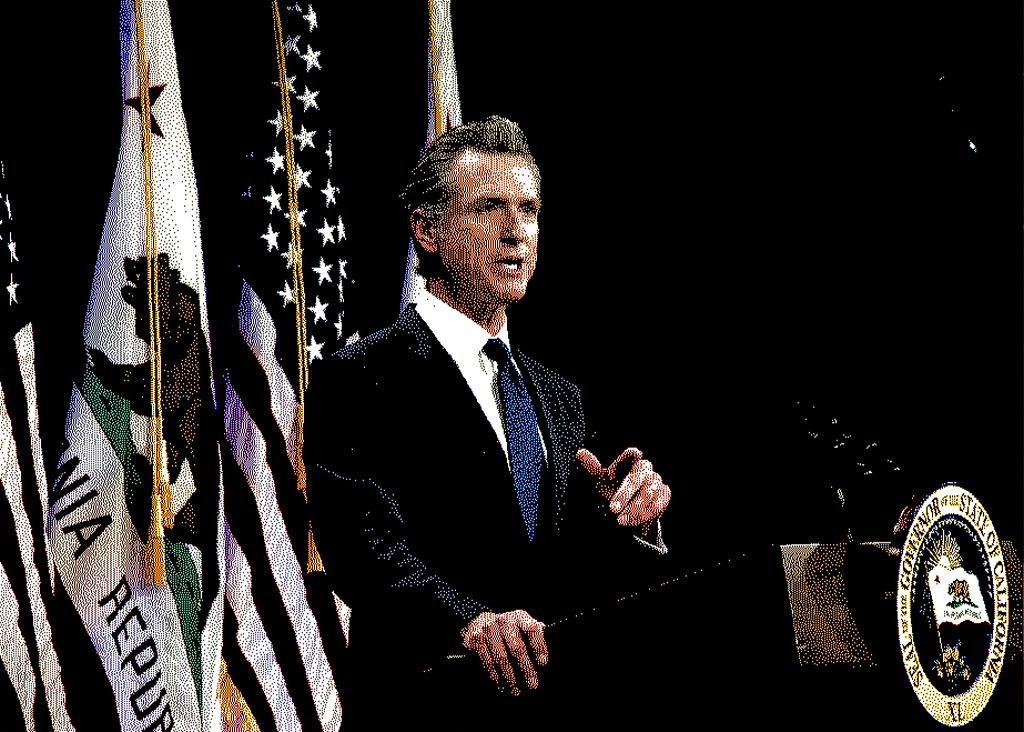
Gavin Newsom has been waiting for this. Or rather, Gavin Newsom has been making sure that when the moment arrived, he would already be standing in the right place.
The California governor who called Trump 'a T-Rex — you mate with him or he devours you,' who warned NYC mayor Zohran Mamdani about the Trump bromance with the insider knowledge of someone who had been on both sides of it, who published a memoir in February 2026 titled Young Man in a Hurry and spent the subsequent months on a book tour that looked, to anyone paying attention, exactly like a presidential campaign — Newsom has been building toward this for years.
In this scenario, Trump's death in the summer of 2026 arrives at a moment of Democratic optimism. The midterms have delivered, or are about to deliver, a House majority. The Iran ceasefire has removed the one issue that might have rallied the country behind Republican leadership. The K-shaped economy — uneven, with working-class spending stagnant and luxury consumption propping up the aggregate numbers — gives Democrats a clear economic message that doesn't require ideological risk.
"He's a broken man. That's why he tried to break this country."
Newsom, running as the anti-Trump from a state that has been the primary laboratory for resistance governance since 2017, offers something the Democratic base craves and the swing voters the party desperately needs: a politician who is aggressive without being unstable, polished without being corporate, and electable without being boring. His memoir's revelations — the dyslexia, the working-mother upbringing, the emotionally withholding father — humanize a figure who has long been accused of being too slick, too wealthy, too aesthetically perfect to feel authentic.
But Newsom's path to the nomination is not clear. The Democratic Party's tectonic plates are shifting. AOC, who used her Munich Security Conference appearance to build foreign policy credibility and polled within two points of Vance in a hypothetical 2028 matchup, represents a constituency that is now roughly a third of the Democratic base — and nearly half of Democrats under 35. The Illinois Senate primary reveals the party's fracture lines in miniature: a moderate (Krishnamoorthi) leading polls, a progressive (Stratton) mounting a late comeback, and the institutional party unable to consolidate.
In this scenario, Newsom wins the Democratic primary by threading the needle. He is progressive enough for the coastal base — his record on housing, climate, and reproductive rights is genuine — and centrist enough for the Midwest swing voters the party cannot afford to alienate. He is the candidate who can look into a camera and say, credibly, that he governed the largest state in the country through wildfires, a pandemic, a housing crisis, and a sustained federal assault on California's institutions — and won.
Against a Republican Party still sorting out what it is without Trump, a Newsom candidacy offers something the Democrats have not had in a presidential race since Barack Obama: a candidate whose charisma matches his resume, and whose story does not require a focus group to make compelling.
GOP trajectory: Disorganized. A Newsom candidacy forces Republicans to run against a governor, not an abstraction, and his record gives them ammunition — California's housing costs, the state's fiscal complexity — that their fractured messaging apparatus struggles to deploy coherently.
Democratic opportunity: Strong but not guaranteed. Newsom's unfavorables outside California are real. The party's progressive wing may resist a candidate they associate with wine caves and tech donors. The primary is competitive.
2028 shape: Newsom vs. Vance or Rubio in a general election defined by competence versus performance. Newsom's advantage: he has governed. His liability: he looks like the thing people have been told to distrust.
Wildcard: AOC enters the primary, splits the progressive vote, and forces Newsom into a runoff dynamic that the Democratic Party's non-ranked-choice primary system is not designed to handle. The party's nominee is determined in a brokered convention for the first time since 1952.
SCENARIO 5: THE AOC ERA: A NEW AMERICAN POLITICS
[23% likelihood]The least likely scenario is also the most transformative. And in the summer of 2026, with the World Cup playing on screens in every bar in America and a dead president cooling the temperature of the national emergency that has been running at fever pitch since January 2025, the conditions for transformation are more present than they have been in a generation.
Alexandria Ocasio-Cortez turns 37 in October 2026. She is the most-followed politician in America on every social media platform. She polled within two points of JD Vance in a hypothetical 2028 presidential matchup before Trump died. She used the Munich Security Conference to establish foreign policy credibility with European allies who are desperate for a sign that the American opposition is real, organized, and electable.
In this scenario, AOC makes the decision that her allies in New York have been pushing her toward and that her internal polling — by all accounts, extensive — has been building toward: she runs for president, not the Senate.
"She doesn't need to run for Senate to gain name recognition. She's looking at something much broader than that."
The argument for her candidacy is structural as much as ideological. The Democratic Party's base is younger, more diverse, and further left than it has been at any point in its modern history. Fifty-eight percent of voters say the party has become too liberal — but that polling masks the generational divide. Among Democrats under 35, nearly half identify as democratic socialists. In an electorate where turnout is increasingly determined by enthusiasm rather than obligation, the candidate who can generate the most genuine excitement is not the safe choice. She is.
AOC's foreign policy positioning — anti-interventionist, working-class focused, skeptical of military adventurism — captures the exact constituency that Trump and then Vance claimed to represent and failed to deliver for. The Iran war is over, but its legacy is not: families who paid $4 per gallon at the pump remember who ordered the strikes and who defended them. AOC, who spent the war's duration as one of its most visible critics, owns that contrast cleanly.
The Latino electorate, which Pew Research estimates at more than 36 million eligible voters and which is decisive in Nevada, Arizona, Texas, and Florida, responds to a candidate of Puerto Rican descent who speaks Spanish, who led the first Spanish-speaking congressional delegation to Latin America, and who has made housing affordability — the top issue for Latino voters in UnidosUS polling — the centerpiece of her domestic agenda.
Against a Republican Party in the middle of an identity crisis — deciding between out-MAGAing itself, de-MAGAfying itself, or splitting into two parties — the AOC campaign offers something that has not been available to the American left in modern political history: a candidate whose authenticity is unimpeachable, whose coalition is ascendant, and whose opponent is a movement without a leader.
It is not guaranteed. The party's institutional wing — the Schumer apparatus, the major donor networks, the consultants whose livelihoods depend on managing candidates toward the center — will not yield without a fight. Newsom is a formidable primary opponent. The general election, in a country where 58 percent of voters already think Democrats are too liberal, is genuinely competitive.
But the window is open. And Alexandria Ocasio-Cortez has spent eight years in Congress waiting for exactly this.
GOP trajectory: Energized by the threat. An AOC candidacy gives the fractured Republican Party the one thing that could unify it: a common enemy. The question is whether unifying against AOC is enough to paper over the MAGA-vs.-establishment split.
Democratic opportunity: High ceiling, real floor risk. An AOC presidency would be a generational realignment. A narrow AOC loss would set the progressive wing back significantly and re-empower the party's moderate establishment.
2028 shape: The most polarized general election in modern American history. Turnout records on both sides. The outcome determined by a handful of states where the Latino vote, the youth vote, and the suburban vote intersect in ways no model has previously been asked to predict.
Wildcard: AOC wins. The United States elects its first woman president, its first Latina president, and its first democratic socialist president simultaneously. The political map does not just shift — it is redrawn from scratch.
Summary
The Iran ceasefire changes the succession calculus in one fundamental way: it removes the crisis that might have rallied the country behind whoever inherited Trump's desk. There is no rally-round-the-flag effect available in the summer of 2026. There is only the inheritance — of a fractured party, an uneven economy, a MAGA movement that has never been asked to function without its founder, and a Democratic opposition that is more energized, more organized, and more demographically formidable than at any point in a generation.
What all five scenarios share is this: the Republican Party's decade-long bet that it could harness a personality-driven movement without building durable institutional architecture has come due. The movement was Trump. Trump is gone. What remains is the question every political party eventually has to answer — not 'who do we nominate' but 'what do we believe' — and the Republican Party in the summer of 2026 has no consensus answer.
The World Cup plays on. The stadiums are full. America, briefly, is watching something other than itself. But the clock is running, and the game has changed.
Likelihood estimates are independent scenario assessments, not cumulative probabilities, and do not sum to 100%. Each figure reflects the assessed plausibility of that scenario on its own terms. Scenarios are not mutually exclusive. These are analytical projections based on publicly available information as of summer 2026. They are not predictions.